Friday, March 31, 2017

3rd Quarter Reflections

Out of all the improvements that I accomplished this quarter, my blogs would be the biggest. They helped me write essays more easier as I no longer waste a lot of time thinking about what to write. Before, I would think of writing theses blogs as if it was the most difficult task of my life. Now, they just seem as if they're just a daily task. They also seem to help me know which words I should use to write towards an audience (expands my vocabulary).

I'm proud that I accomplished learning about the Holocaust. Before, I didn't know much about it. At that time, I only thought of it having something to do with Hitler and Jewish people. I now know that there is more to that as it was one of the reasons why the word “Genocide” was created. Sometimes I wonder "If Hitler never came into power, would World War II occur or will it never exist?"

The most challenging task of this quarter would have to be the amount of homework we were given earlier (January–late February). I overcame the difficulty of the homework by switching up my schedules for doing homework with other things that I don't really need to have. However, as the quarter was progressing further towards the fourth quarter, the homework became more easier.


Thursday, March 30, 2017

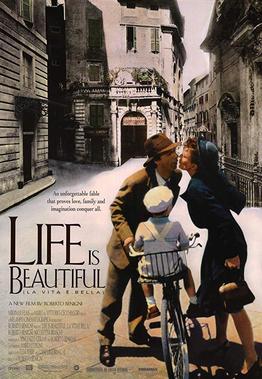
Life is Beautiful

Life is Beautiful was wonderful as it was very good and had a lot of similarities and differences. One of the similarities from the movie and Night was that both protagonists were sent onto the train that was going to a concentration camp. The difference of this however, is that Elie was sent there for almost two years while the main characters in the movie was sent to a camp close to the end of the war. Another similarity between Life is Beautiful and Night is that both Elie and Giosuè lost their father during their time inside the concentration camp, only Giosuè was a child while Elie was only a teenager.

Life is Beautiful and Night also had similarities and differences about the situations that were happening. One of these differences is that Life is Beautiful took place mostly in Italy while Night took place mostly in Auschwitz, Birkenau, and Buna. Life is Beautiful also show the effects of Italy taking over Ethiopia and how they celebrated with their victory while Night only talks about the event briefly. Night is a bit similar from Life is Beautiful during the camps as Night describes the conditions and horrors of what he saw. Life is Beautiful is the same as there is a scene where Guido (the father) is carrying Giosuè (his son) during their attempt at escaping the concentration camp, witnesses a massive pile of deceased Jewish prisoners and slowly walks away.

The tone and mood of both Life is Beautiful and Night is different and similar. Life is Beautiful and Night starts off joyful as the main characters are living their peaceful and exciting lives in the beginning but becomes gloomy as they are taken to the camps. Night and Life is Beautiful also have the same point of view (first person). However, Night is told in a more serious tone while Life is Beautiful contains humorous events but still is shown serious.

Life is shown beautiful in the film as it adds elements of romance and humor to show how joyful the characters were. In the film, Guido goes everywhere near Nora and does anything that gets him close to Nora such as impersonating an inspector, being a waiter at a fancy hotel, etc. Also scene from the film that shows how life is beautiful is how Guido and Nora become married and start their life together with their family.


Monday, March 13, 2017

Night blog

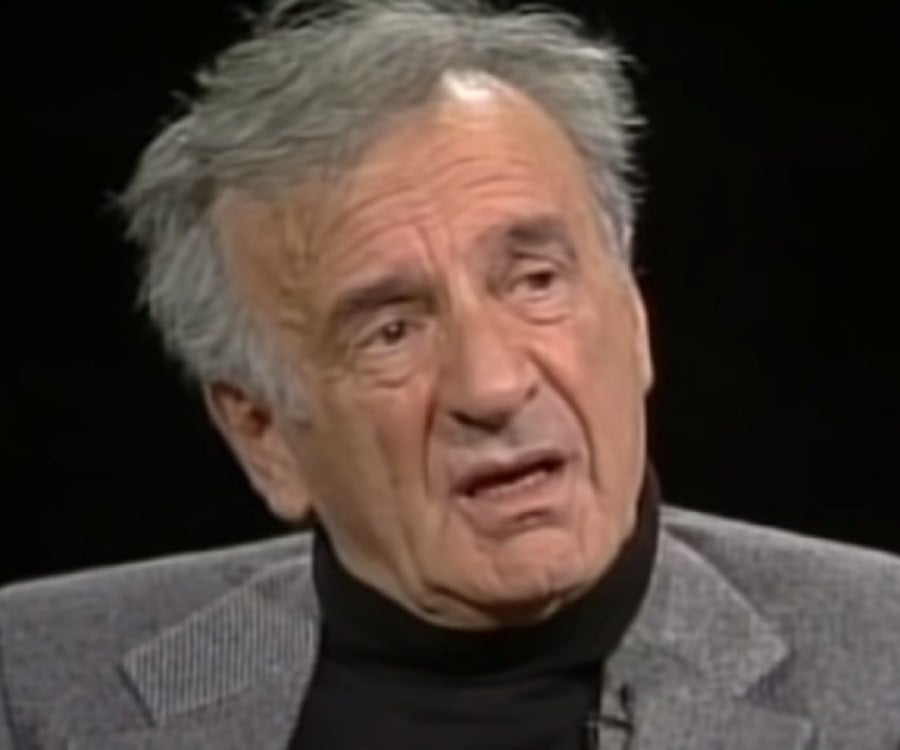
Elle’s experiences during the Holocaust changes him as a person by changing his religious faith. In the beginning of the book, Elie was very pious towards his god. Wiesel stated that, “One evening I told him how unhappy I was because I could not find a master in Sighet to instruct me in the Zohar, the cabbalistic books, the secrets of Jewish mysticism”. Wiesel was very pious as he wanted to learn everything of his Jewish religion.

Later on in the book, Elie begins to change. Elie states that he had witnessing prisoners being sent to the crematory to be burned alive. “A lorry drew up at the pit and delivered its load—little children. Babies! Yes, I saw it—saw it with my own eyes….those children in the flames… For the first time, I felt revolt rise up in me. Why should I bless His name? The Eternal, Lord of the Universe, the All-Powerful and Terrible, was silent. What had I to thank Him for?” (30). Before Elie and his family were sent to Auschwitz (They were still in Sighet), Elie had always wanted to study the Cabbala, Talmud, and learn Mysticism but as he made his way to the concentration camp, He began losing his religious faith towards his God as if He was dead. “Never shall I forget that nocturnal silence which deprived me, for all eternity, of the desire to live. Never shall I forget those moments which murdered my God and my soul and turned my dreams to dust, never shall I forget these things, never if I am condemned to live as God Himself. Never.” (Wiesel 32)

Another change that was caused by his experiences during the Holocaust was his relationship with his father. Once Elie and his father had arrived at Auschwitz, his father had a colic attack which he asked “Excuse me, can you tell me where the lavatories are?” (Wiesel 36). Upon asking this question, he was struck by the gypsy where Elie thought, “What had happened to me? My father had just been struck, before my very eyes, and I had not flickered an eyelid. I had looked on and said nothing. Yesterday, I should've sunk my nails into the criminal’s flesh” Wiesel 37). As time passes, Elie’s father was beaten by Idek with an iron bar. What's different is that Elie “was thinking of how to get further away so that I would not be hit myself. What is more, any anger I felt at that moment was directed, not against the Kapo, but against my father. I was angry with him, for not knowing how to avoid Idek’s outbreak. That is what concentration camp life had made of me. This shows how Elie had thought of doing something against the gypsy that struck his father when he arrived at Auschwitz but changes as he thought of moving further away from his father who was being beaten by Idek at this moment in order to not get hit.

Wiesel, Elie. Night. New York, NY: Hill and Wang, a division of Farrar, Straus and Giroux, 2013. Print.

Monday, February 27, 2017

Butterfly Project


"Man Proposes, God Disposes"
Who was helpless back in Prague. 
And who was rich before, 
He’s a poor soul here in Terezin, 
His body’s bruised and sore. 

Who was toughened up before,
He’ll survive these days.
But who was used to servants,
Will sink into his grave.

Koleba (Miroslav Košek, Hanuš Löwy, Bachner) 
26.II.1944

I commented on Angel's, Ingrid's, Jorge's, Erik's, Gabe's blog

Thursday, February 9, 2017

Berlin Memorial

Based on the Berlin Memorial activity we did in class, I learned that throughout 1933-1945, there have been 300 events that occurred when Hitler was Chancellor of Germany. As the years progressed, Hitler established restrictions that had a small impact on Jews leading up to the most impactful ones. One of the laws that had a small impact on Jews was "Jews cannot belong to German Automobile Club". Another restriction that Hitler placed towards Jew and had a high impact was "Jews over six years old of age to wear yellow star with word "Jew". This had a high impact since it made people that were Jewish easier to find and deport to concentration camps.

I think the monument was built to show the world to learn from their mistakes (Holocaust) and to prevent any event close to becoming like the Holocaust. It could also show support to Jewish people and the entire world to overcome the horrific event.

I noticed that the restrictions that were passed between 1933-1945 in Germany had a order from least impactful toward most impactful. The restrictions starts out with Jews losing their jobs such as "Jewish civil servants discharged from their jobs" and "Jewish teachers to be discharged" as if Hitler was trying to make Jewish people become unable to support themselves and their families. As the law progresses, the more impactful the restrictions become such as "Jews no longer allowed to emigrate". 

Out of all the restrictions that Hitler placed, I think that not being allowed to have pets would be the hardest for me for muiltple reasons. One of the reasons is that you become attached to them as if they were family. Another reason is that pets can help you cheer up if you're having a bad day. Without them, you would be lonely and possibly depressed without them.


Friday, January 20, 2017

Quarter 2 Reflections

Out of all of the books I have read this quarter, the best book I've read would have to be The Nazi Hunters for a couple of reasons. One of the reasons is that The Nazi Hunters intrigues you (the reader) with really good cliffhangers that leave you questioning, "What's going to happen?"  "Did he/she get caught?".

The area that I most improved on in English Language Arts would be writing blogs. Last quarter, my blogs were more of a quantity then quality, meaning I didn't really put all of my true effort into them, and vise versa.

Something that I accomplished since New Years that I'm proud of would be my newest investigative journalism blog (Syrian Civil War) since I finished writing the blog in less then two hours (the fastest I've gone for completing a blog).

My progress currently for my 40 book challenge is 15 books right now. I would've been at 18 books by now but I had forgotten the names of those books since I never wrote it down.

The most challenging thing about the 2nd quarter would be Article of the Week. The reason why it was challenging was because it took me a long while to fully understand the central idea of each articles. What I did to solve this problem was to study for a lot of time each day (30-40 minutes) on Articles of the Week in order to fully understand it.

My blogs have been progressing a lot since August since blogging became a usual thing in this Language arts class, making it far easier to write blogs. I've also stopped using a lot of words (quantity) and instead replacing it with quality.

I've used strategies such as studying, memorizing with flash cards, researching to help benefit me with my writing, thinking, and reading.

I've learned that the world has a tremendous amount of problems such as war, poverty, homeless, extinction, the list just keeps going on. It's just insane to see how many problems we face everyday and sometimes we don't act/do anything about it.

My research skills have improved since the 1st Quarter now that I find research without depending on someone or something. Other than that, it's still the same


Thursday, January 19, 2017

Syrian Civil War

Last summer, while on a trip with the Eisenhower Institute’s Inside the Middle East program. I stood at the Israeli edge of the Golan Heights and heard a bomb explode across the border in Syria. We had spent the day within several miles of the war-ravaged nation with all remaining quiet until that moment, and while none of us wanted to admit it, we had the smallest hope that we might catch a glimpse of the conflict. However, when the sound of the detonation roared across the hills, excitement was replaced by a sense of fear and grief. I had lived a year in Gettysburg, yet I had never felt so close to a battlefield.

— Annika Jensen (age 18)

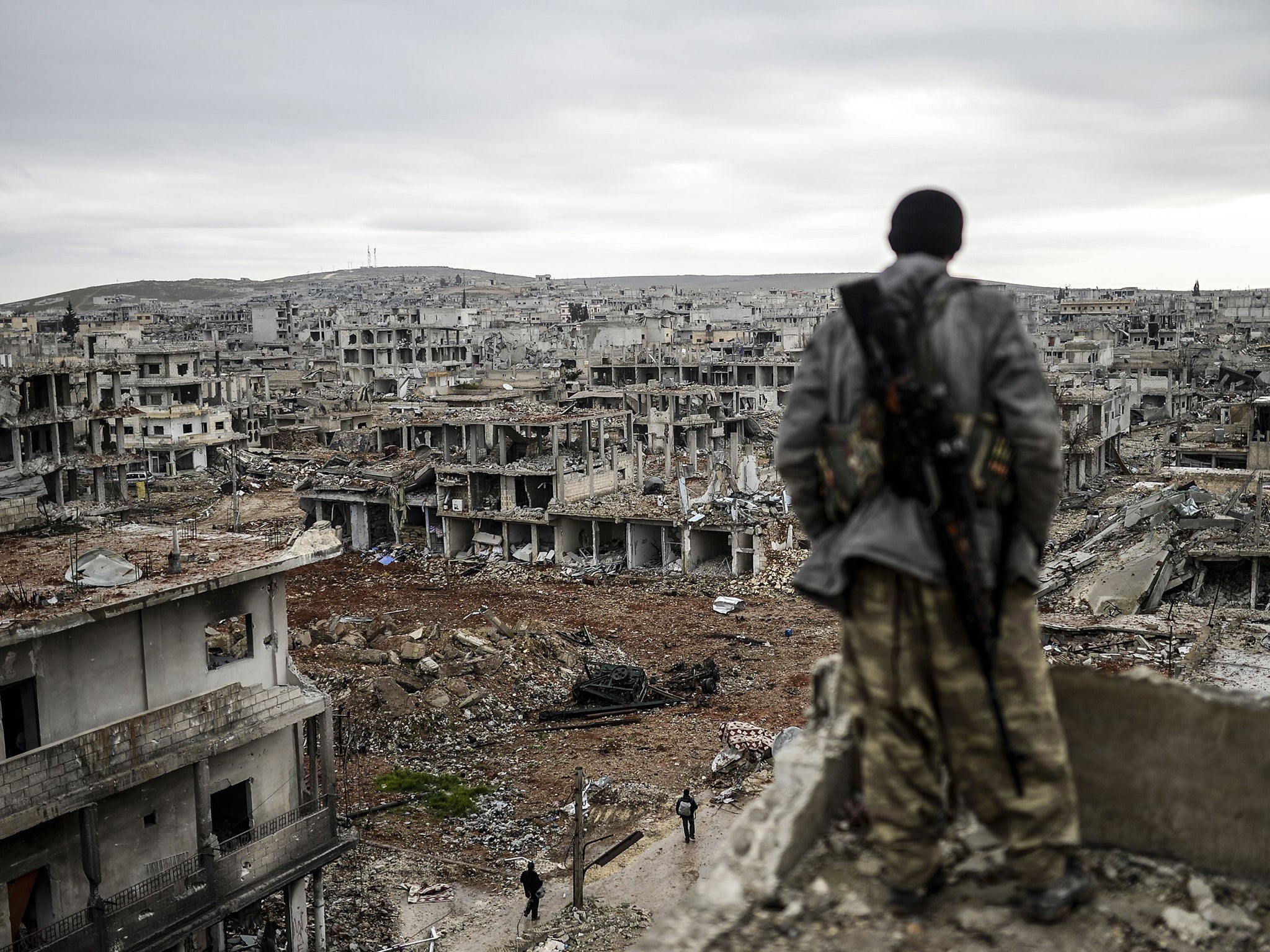
Currently in the world, Syria has been fighting a civil war for about six years now. Syria currently has a population of 17.8 million (estimated). Syria was once one of the world’s leading tourist destinations in the Middle East with its culture and history such as it's Ancient City of Aleppo, Dead Cities, and its old cities of Damascus and Bosra. Due to the civil war happening right now, tourist numbers fell by a shocking number of 98%. With that amount of tourist decline, it has brought a tremendous amount of decline with money with about $6 billion in losses.

The Syrian Civil War started as a peaceful protest that civilians acted on demanding the Syrian Government to meet their demands such as lack of freedom and economical issues.

After 15 boys were arrested and tortured for writing graffiti supporting the “Arab Spring” (series of anti-government protests, demonstrations, and armed rebellions that occurred across the Middle East). One of the boys was brutally tortured and died from his punishments. After this event occurred, The Syrian Government and President Bashar al-Assad acted on the protests by killing hundreds of demonstrators and arresting and prisoning more. This brought defectors/traitors from the military to form the rebel group “Free Syrian Army” with the goal of overthrowing the  government. From this point, Syria has just began its civil war. The civil war brought many rebel groups to help overthrow the government such as ISIL/ISIS.

 As the war continues to grow, territory is being changed. As of August 2016, The government of Syria only holds 35% of Syria (66% of population) while ISIS controls 35% of Syria as well. 12% is controlled by other rebel groups and 18% is held by the Kurds (Islamic people living in parts of Eastern Turkey, Northern Iraq, Western Iran, and Eastern Syria.

The results of the Civil War has brought 450,000 deaths with 50,000 being children and 4.81 million Syrians fleeing the country and 6.3 million people are displaced internally (someone who is forced to flee his or her home but who remains within his or her country’s borders. They are often referred as refugees, although they do not fall within the current legal definition of a refugee).

At this rate, the war should end with a peace treaty between the Syrian Government and the rebel forces. The amount of casualties and people fleeing has created more problems for other countries as they could or could not have the refugees stay there. Therefore, a diplomatic peace treaty would be the right way to end this civil war as we once did in the United States (The Civil War between the North and South) and rebuild the country.

As of December 22, 2016 - Syria’s state-run media has announced government forces has taken full control of Aleppo, ending more than four years of rebel rule there.